

Who’s Changing Postpartum Care: Dr. Neel Shah, MD
A conversation about why recovery deserves a system, not just a six-week checkup

Every week, we hear stories about postpartum care that fell short. A missed symptom, a rushed appointment, or a mother sent home with questions she didn’t know she should ask. These stories are personal, but they also point to something larger: many of the challenges women experience in maternity care are structural failures.
Who’s Changing Postpartum Care (WCPC) is a new interview series that highlights the clinicians, researchers, advocates, and innovators working to rethink how we support mothers. Rather than focusing only on what is broken, this series asks what is being built, what needs to change, and who is helping lead that change.
For the first conversation, I had the privilege of speaking with Neel Shah, MD one of the leading voices in maternal health and healthcare innovation. His work centers on improving maternal outcomes by redesigning care systems, not just individual moments of care. His perspective challenges the idea that postpartum is a short, self-contained phase, and instead frames it as a longer recovery that requires structure, follow-up, and attention. It’s a way of thinking that puts words to a gap many mothers feel but often struggle to identify.

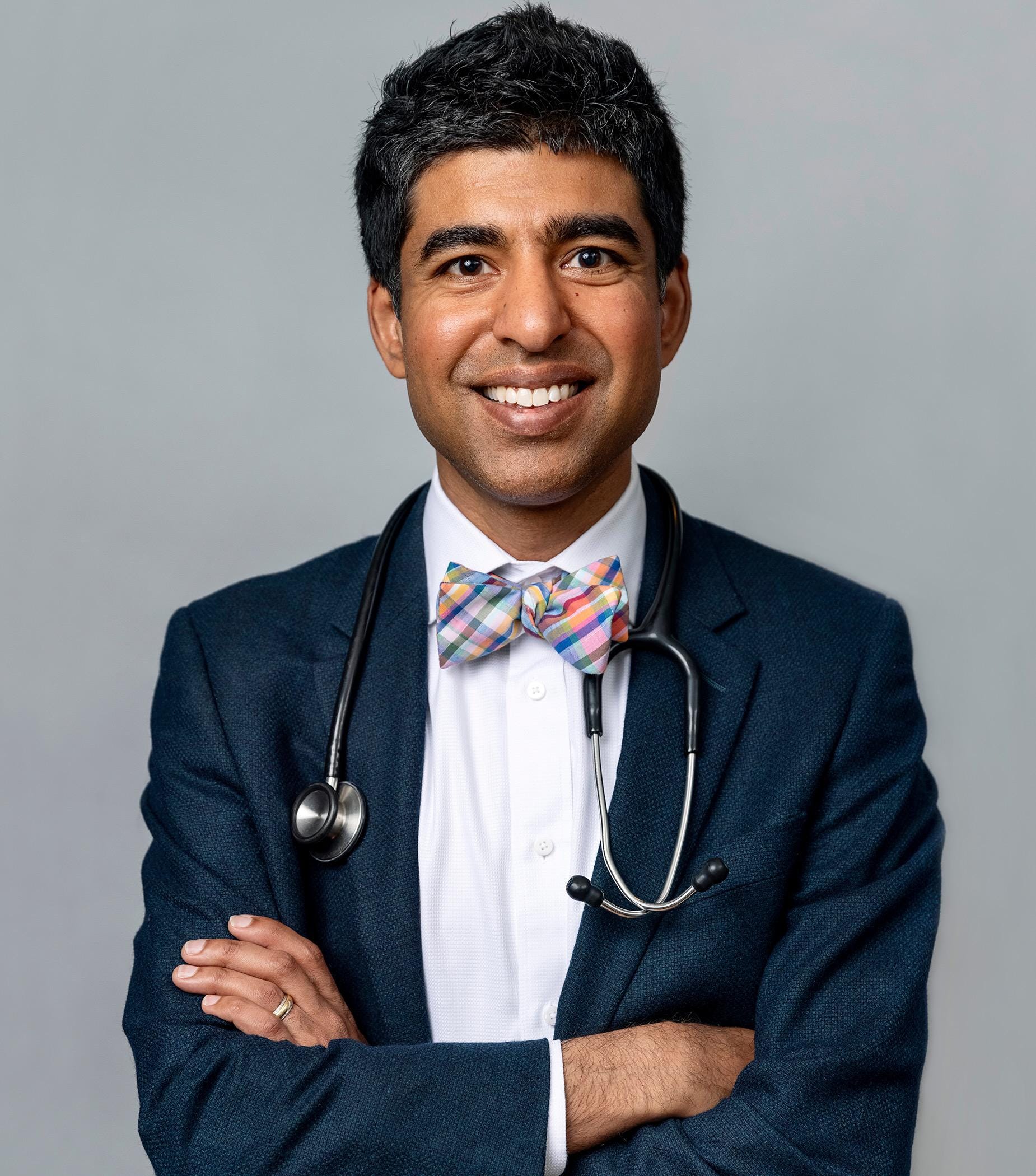
Dr. Neel Shah, MD, MPP, FACOG
Chief Medical Officer, Maven Clinic & Assistant Professor, Harvard Medical School
About Dr. Neel Shah
Assistant Professor, Harvard Medical School
Founder, Costs of Care
Co-founder, March for Moms Association
Author, Understanding Value-Based Healthcare (McGraw-Hill, 2015)
Writer of The Preprint, a Substack exploring the science, innovation, and policy shaping the future of family and women's health
Named one of Becker’s Hospital Review’s “40 Smartest People in Health Care”
A prominent maternal health advocate, Dr. Shah co-founded March for Moms in 2017 to elevate the wellbeing of mothers and families in U.S. policy and practice. At Maven Clinic, he leads clinical strategy for virtual women’s and family health services, integrating technology with compassionate, evidence-based models of care. His collaborations span architecture, data science, and public health to address systemic disparities in childbirth outcomes.
He has authored more than fifty peer-reviewed papers and contributed to four books. His scholarship on value-based care and respectful maternity practices has been cited globally, and his work has been featured in The New York Times, CNN, and Good Morning America. He also appears in the acclaimed documentaries Aftershock and The Color of Care.
You can learn more about Dr. Shah and his work through The Preprint, his Substack exploring the future of family and women’s health.
“Recovery is not a fifteen-minute conversation. It’s a continuous, deeply personal process, and we can’t keep pretending otherwise.”
Four Questions with Dr. Neel Shah
In our conversation, we discussed why postpartum often feels invisible within the healthcare system, what a more effective model of care could look like, and why redesigning maternal healthcare requires thinking beyond birth itself. Here are four questions Dr. Shah answered.
1. What is one thing you believe is fundamentally missing from postpartum care today?
A third of maternal morbidity happens after birth yet half of American women never make it to their postpartum visit, and the ones who do get fifteen minutes. We’ve built a system that treats recovery as an afterthought, when the data tells us it’s where the families get most benefit from effective support.
2. Where do you see the biggest gap between what mothers need and what the system currently provides?
Mothers benefit from multiple forms of expertise (a lactation consultant, a pelvic floor PT, a mental health clinician, someone who understands how chronic conditions shift postpartum). What they get is a single appointment, with a single provider, once. Recovery is not a fifteen-minute conversation, rather, it’s a continuous, personal process, and we can’t keep pretending otherwise.
3. If you could change one thing about postpartum care tomorrow, what would it be?
Untether it from the office visit. Half of women don’t make it to their postpartum appointment because the system makes it hard. Care needs to come to them, sometimes in person, but also through telehealth, through proactive outreach, through care teams built around their specific needs. The technology exists. What’s missing is the will to use it.
4. What is something you wish more patients understood about postpartum recovery?
You’re not supposed to feel fine at six weeks. Recovery is hormonal, neurological, physical and it takes place on its own schedule, not the system’s. If something feels wrong, that feeling is meaningful, and you deserve more than fifteen minutes to surface it.
Postpartum is often treated as an endpoint, when in reality, it’s the beginning of a complex recovery that takes place over months, not weeks.
Voices like Dr. Shah’s are helping to reshape how that recovery is understood and supported, moving beyond a single-visit model toward something more continuous, responsive, and aligned with what mothers actually need.
A sincere thank you to Dr. Shah for lending his voice and expertise to the inaugural edition of this series. I’m honored to share these conversations and hopeful they can help move the dialogue around maternal care forward. That’s exactly what this series hopes to explore.
Stay golden,
Casey 💫